Why nobody can give you one number on the phone
Owners in San Fernando who are tired of buying oak by the cord tend to ask the same opening question: how much to put gas logs in the fireplace they already own? The fair reply is a range we narrow once someone has stood in front of the firebox with a tape and a light. Log sets are not on our published price list, because the parts that swing the total hide behind the brick, under the floor and up the flue.
What we can do here is open up the bill, line by line, so you know what we measure on the visit and why two houses on the same street can land far apart.
The four lines that decide the total
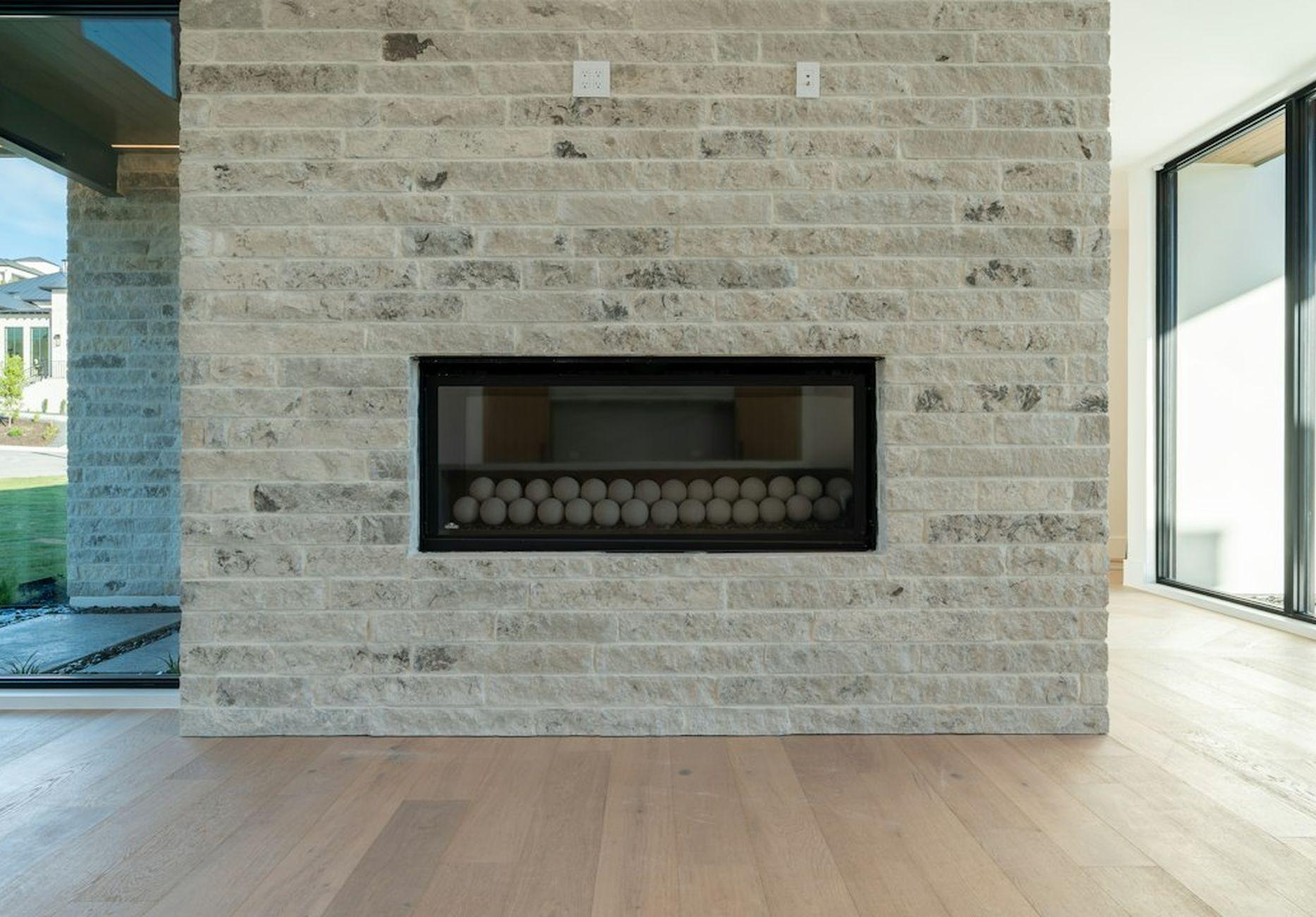
The set. A short stack of ceramic fiber logs over a single burner sits at the low end. A deep refractory set with an ember bed, glowing wool and a split burner pan sits at the top. Wider fireboxes take wider burners, and the logs are chosen to suit the burner, never the reverse.
Vented or vent-free. A vented set gives the tall, lazy, wood-looking flame most people picture, and it sends every bit of its exhaust up the chimney, so the damper stays open whenever it burns. A vent-free set burns hotter and cleaner and releases its exhaust into the room, so it carries an oxygen-depletion sensor and the maker caps the size of room it may go in. Plenty of owners rule vent-free out on smell or moisture alone. We talk through both before anything is ordered.
The gas pipe. Many older houses here already have a valve near the hearth that once fed a log lighter. That small pipe often cannot carry enough gas for a full burner, and the valve may be decades old. Upsizing the line, running it from a closer branch or bringing gas to a fireplace that never had it is labor and pipe that land on the quote.
The chimney above. A vented set leans on the chimney to carry its fumes away. If the flue has a cracked tile, a nest, or a damper that will not stay open, that has to be put right first. A sweep, from $425, clears years of wood soot so the exhaust has a free path. A Level 1 inspection, $55, tells us whether something bigger is going on before you spend money on logs.
Extras that appear on some quotes
- A damper clamp, so nobody can close the damper while the burner is running
- Remote or wall switch lighting, which needs a receiver and sometimes power at the hearth
- A screen or glass doors sized to the opening
- Firebrick repair where years of hot wood fires have cracked the back wall
- Hauling out the old grate and ash and scrubbing the firebox floor
None of these are forced on you. They show as separate lines so you can strike one and see the total move.
How logs compare with an insert
Logs are the cheapest road into gas and also the least efficient. With a vented set, most of the warmth rides up the chimney with the exhaust. They are a choice for looks and ease, not for heating the house. If you want the fireplace to warm the room, a sealed insert is the other road, and ours run $2,800 to $5,650 installed, depending on the unit and the venting it needs. We set the two next to each other in Gas Insert or Gas Logs?.
What happens on the visit
A tape goes across the opening, along the back wall and into the depth of the box, because burners are sold by those three numbers. We open the valve cover and look at the pipe size and the shutoff. We work the damper and look up the flue as far as a strong light reaches. If vent-free is on the table, we measure the room. Then you receive a written price that names the set, the burner, any gas work and any chimney work as separate items.
Ask for a gas log visit and give us the rough width of the fireplace, whether a gas valve sits next to it today, and whether you are after flame or heat. That is enough for us to bring the right sample sets.
Questions we hear about logs
Can logs go in a fireplace that has never had gas? Usually. A line has to be run to it, which raises the price, and the fireplace itself has to be sound and drawing well.
Does the chimney still matter once wood is gone? Yes. A vented set still sends its exhaust up the flue, and that exhaust carries a lot of water vapor, which works on mortar that is already weak. A gas flue gathers far less soot, but it still needs to be open and intact.
Can a vent-free set go in any room? No. Bedrooms and small rooms are often excluded by the maker. We tell you on the visit whether your room fits the limits written in the manual.
What about no-burn alerts? San Fernando sits inside the South Coast AQMD. The district's winter alerts target wood fires. A gas set is not covered by them, which is one reason so many owners here make the switch.
Will logs raise the value of the house? We do not make that kind of promise. What a buyer does like is a working fireplace with paperwork, which is why we leave you the written scope and the model details.
Before you choose
If the fireplace is mostly decoration and a few winter evenings, logs make sense. If the room is cold every night from December to February, read about inserts first. Either way, the gas log service page lists what we fit, and our San Fernando area page shows the neighborhoods we cover.
When the woodpile has had its last season, a short note through our contact page about the fireplace and the room it sits in lets us plan the visit around your house.
Want Us to Look at Yours?
Quinlan Chimney Group moves fireplaces in and around San Fernando from wood to gas, and readies the chimney for it. Send the details and we will lay out the options that fit your house.