Two different jobs that both burn gas
When a San Fernando household decides the wood era is over, the choice usually comes down to two products that sound alike and behave nothing alike. A log set puts a flame where the wood used to be. An insert puts a sealed heater inside the old opening. The first is about atmosphere. The second is about warming the room. Price, venting and what we need from your chimney all follow from that split.
Below, each option gets its own section, then a side by side table, then the points that usually decide it.
Gas logs: the look of a fire
A log set is a burner pan with ceramic or refractory logs arranged on top, lit by a pilot or an electronic igniter. In the vented form it burns in the open firebox, with the damper held open, and nearly all of the heat goes up the chimney with the exhaust. Sitting close to it feels warm. The far side of the room barely notices.
Logs suit owners who light the fireplace for guests and holidays, who like the open look, and who do not want a metal face in front of the brick. They are also the lower bill of the two. Log sets do not have a published price with us, because the size of the firebox and the state of the gas pipe vary so much. We price them on paper after measuring, and our post on what a gas log set really costs walks through the lines.
Gas inserts: a heater in the old opening
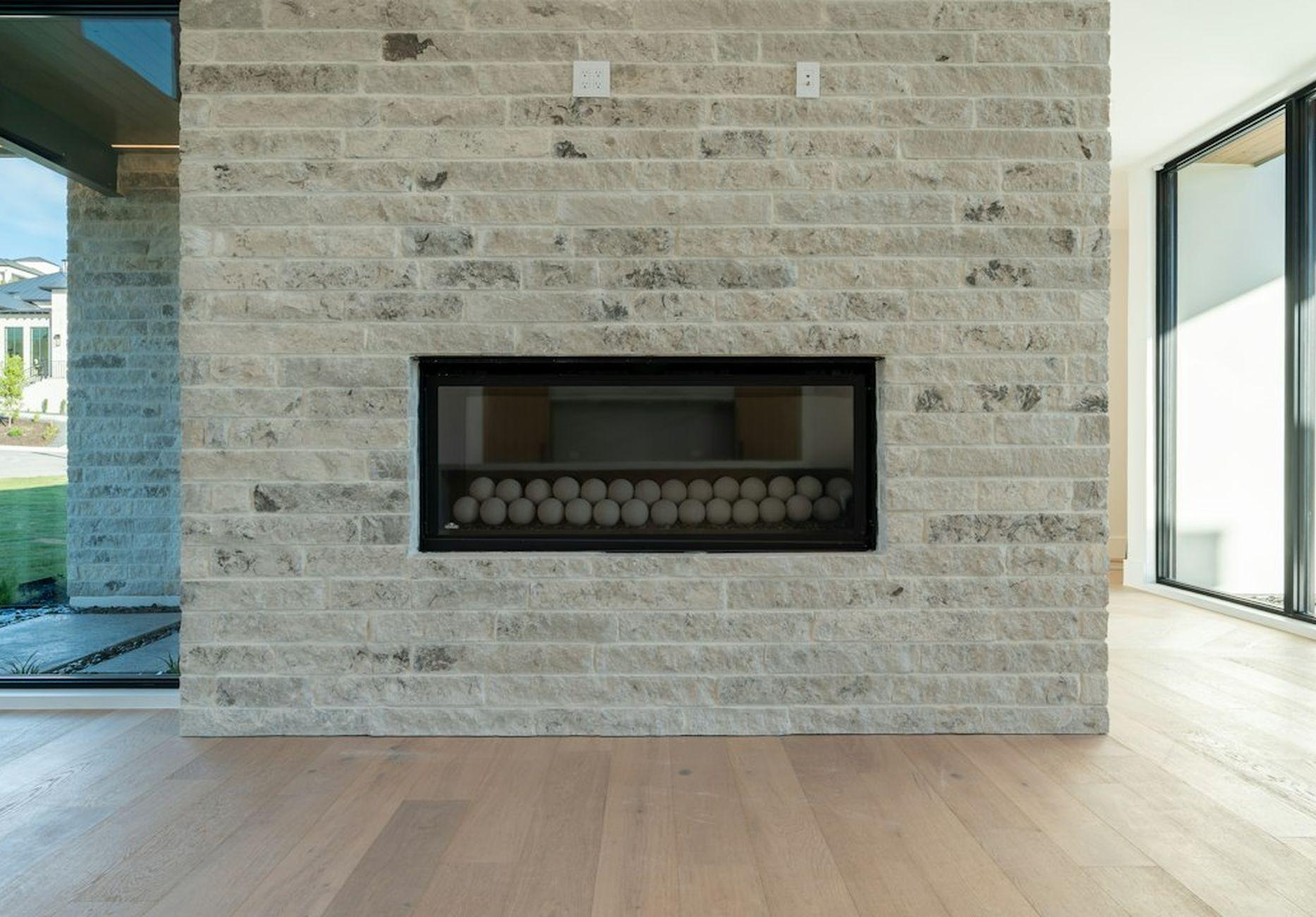
An insert is a closed steel box with a glass front, a burner, a fan on most models and its own venting. It slides into the masonry firebox, and a trim panel covers the gap around it. Two flexible pipes, or one pipe inside another, run up the inside of the chimney: one pulls outdoor air down to the burner, the other carries exhaust out the top. Because the fire is sealed off from the room, the heat stays in the house instead of riding up the flue.
Inserts suit owners who want to sit in a warm room on a January night, who are tired of drafts from the open fireplace, and who are happy with a framed glass face. Ours run $2,800 to $5,650 installed. The spread comes from the size of the unit, the height of the chimney and how much venting it takes to reach the top.
A third route: gas where there was no fireplace
Some owners in San Fernando have no masonry fireplace at all, or have one in the wrong room. A sealed gas unit can be framed into a wall and vented straight outside or up through the roof. On our list that work runs $4,550 to $9,100, since it involves framing, a vent route and finishing a new wall. We mention it because it sometimes beats putting money into a chimney that needs major work.
Side by side
| Log set | Insert | |
|---|---|---|
| Main purpose | The look of a flame | Heating the room |
| Where the heat goes | Mostly up the chimney | Into the room, often by fan |
| Damper | Held open while burning | Usually removed for the vent pipes |
| Venting | The existing flue | New liners from the unit to the top |
| Our price | Written price after measuring | $2,800 to $5,650 installed |
| Front appearance | Open firebox | Glass panel with metal trim |
What each one asks of the chimney
For logs, the chimney has to be sound and drawing. A cracked tile or a collapsing smoke chamber still matters, because the exhaust follows the same path wood smoke did. A sweep, from $425, gets old creosote out so it does not flake onto new logs.
For an insert, the old flue tile mostly becomes a chase for the new pipes. What matters more is the top: a cap that fits the liner termination and a crown that will not let water down onto the insert. The damper plate usually gets taken out to give the pipes room. If the chimney was damaged in an old quake or the crown is breaking up, we price that work on the same quote so you see the whole picture.
Before either job we like a camera look. A Level 2 inspection runs $395 and shows the full flue, which tells us whether logs can use it as it stands and how an insert's liner will travel.
How we price your switch
The things that move the price are the width and depth of the firebox, the height of the chimney, whether there is a gas pipe at the hearth and how big it is, and what the top of the chimney looks like. Once we have seen those, you get one written quote with each option priced, so you can compare logs and an insert for your own fireplace rather than an average one.
Book a comparison visit and say which room the fireplace is in, how often you would light it, and whether you mainly want flame or warmth.
What usually decides it
- How you use the room. Evenings in front of the fire most nights point to an insert. A few times a season points to logs.
- Drafts. An open fireplace pulls warm air out of the house even when unlit. An insert closes that hole.
- The look. Some owners love the open brick and will not cover it. That settles it in favor of logs.
- Budget now versus later. Logs cost less on day one. An insert costs more but heats, which some owners weigh against running the furnace.
Questions owners ask us
Can I start with logs and add an insert later? Yes, though the log set is not reused. Think of logs as the end point for that fireplace unless your plans change.
Does an insert need electricity? Many run a fan and some light electronically, so an outlet near the firebox helps. Several models still light and burn during a power cut with the fan off.
Do no-burn days apply? San Fernando falls under the South Coast AQMD, and its winter alerts are about wood. Gas logs and inserts are outside them.
See the gas log and insert service pages for the models we fit. When you know which way you lean, or want us to help you decide, write to us through the contact page and we will set up a visit to measure.
Want Us to Look at Yours?
Quinlan Chimney Group moves fireplaces in and around San Fernando from wood to gas, and readies the chimney for it. Send the details and we will lay out the options that fit your house.