One mess instead of two
Most people who switch from wood to gas in San Fernando also dislike the fireplace face: smoke-stained brick, a cracked tile hearth, a mantel that looks its age. Doing the conversion and the remodel as one project means one round of dust sheets, one set of measurements, and a finished wall built around the gas unit you actually chose. Doing them apart often means tearing out new tile to fit a trim kit that arrived later.
This post covers the order we follow, the rules that limit what can go near a gas flame, the finishes owners pick, and how the price comes together.
The order of work
1. Look at the chimney first. Before any design talk, we want to know the chimney can carry what you plan to burn. A Level 2 inspection at $395 puts a camera through the full flue. 2. Settle the gas unit. Logs, an insert or a sealed wall unit each leave a different opening. The finish is drawn around that opening, so the unit is chosen before tile. 3. Fix the chimney. Crown, cap, liner or damper work happens while the face is still rough. 4. Run the gas. Pipe goes in before the wall is closed. 5. Set the unit and build the face. Surround, hearth and mantel come last, cut to the unit's trim.
Clearances decide the design
Every gas unit comes with a manual that sets how close wood and other things that burn can be to the opening. That includes the mantel shelf, the side trim and anything hung above. Deeper mantels must sit higher. A TV above a fireplace has its own heat question. We read the manual with you before the design is fixed, because a remodel that fails the clearance list has to be redone.
The hearth is the other measure. Some gas units need a hearth extension in front, others do not. When a wood hearth can shrink, the room often gains floor.
Finishes, one at a time
Tile. Porcelain and ceramic take heat near a gas unit well and come in every look. Large format tile means fewer grout lines over old brick.
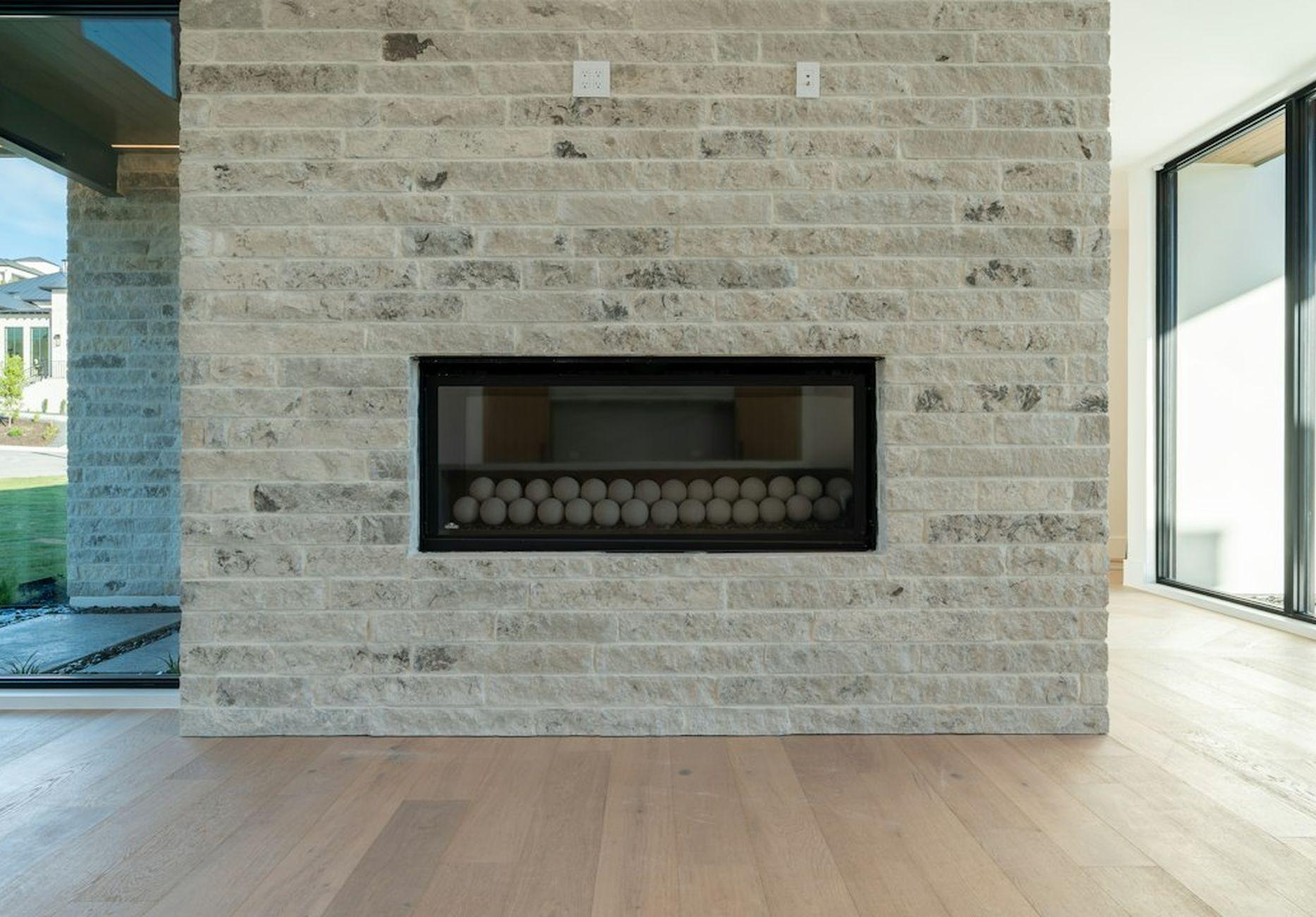
Stone veneer. Thin stone set over the existing brick gives a heavy look without the weight of full stone. It needs a sound backing, which we check first.
Plaster. A smooth lime or cement plaster face suits Spanish-style houses common around San Fernando. It covers uneven brick in one even surface.
Painted or limewashed brick. The cheapest change. Heat-rated paint is used close to the opening. It does not hide cracks; those get repaired first.
Steel. A blackened steel panel around an insert gives a clean frame and handles heat right at the edge.
Inserts and surrounds
An insert brings its own metal trim. The surround has to meet that trim neatly, so we order the unit before cutting tile. Inserts run $2,800 to $5,650 with us. If you are weighing logs against an insert, our comparison post sets them side by side.
Logs inside a new face
A log set keeps the open firebox, so the remodel frames brick, not metal. That gives more freedom on the surround but less on the inside: the firebox walls stay on show, and smoke-darkened brick behind a new white plaster face looks odd. Many owners have the inner box cleaned and the back wall repaired or refaced with new firebrick at the same time, so the opening matches the wall around it. Glass doors, if you want them, are sized after the face is built, since a thicker surround changes the opening by an inch or two.
How the price comes together
A remodel quote has more lines than a straight conversion, and each is shown on its own:
- The gas unit and its venting
- Gas pipe to the hearth
- Any chimney work the inspection called for
- Demolition of the old face or hearth
- The new surround, hearth and mantel in the material you pick
- Finishing: grout, sealing, paint touch-up
The surround and mantel do not have a published price, because the area, the material and the state of the brick behind it vary by house. They are priced on paper once we have measured the wall. That keeps the quote tied to your fireplace.
Ask for a remodel visit and tell us which gas option you lean toward, roughly what you want the wall to look like, and whether the mantel stays or goes.
Common surprises
- Brick behind the old tile is damaged. Old hearths sometimes hide cracked brick. We show you before building over it.
- No gas at the hearth. A line has to be run, often under the floor.
- The damper is rusted solid. It may be removed for an insert, or need fixing for logs.
- The chimney top needs work. A cracked crown above a fresh remodel lets water stain the new finish. See our crown repair page.
Questions owners ask us
Can the old mantel stay? Often, if it meets the clearance for the new unit. If not, it can sometimes be raised.
Do I need a permit? Gas pipe work and new appliance installs usually need one from the city. We tell you what applies for your address.
How long does the house look like a job site? It depends on the finish. Tile and plaster need drying time. You get the sequence in writing with the quote.
Our fireplace remodel page shows the finishes we build. When you have a picture of the wall you want, put it into words on our contact page and we will come out to measure it.
Want Us to Look at Yours?
Quinlan Chimney Group moves fireplaces in and around San Fernando from wood to gas, and readies the chimney for it. Send the details and we will lay out the options that fit your house.